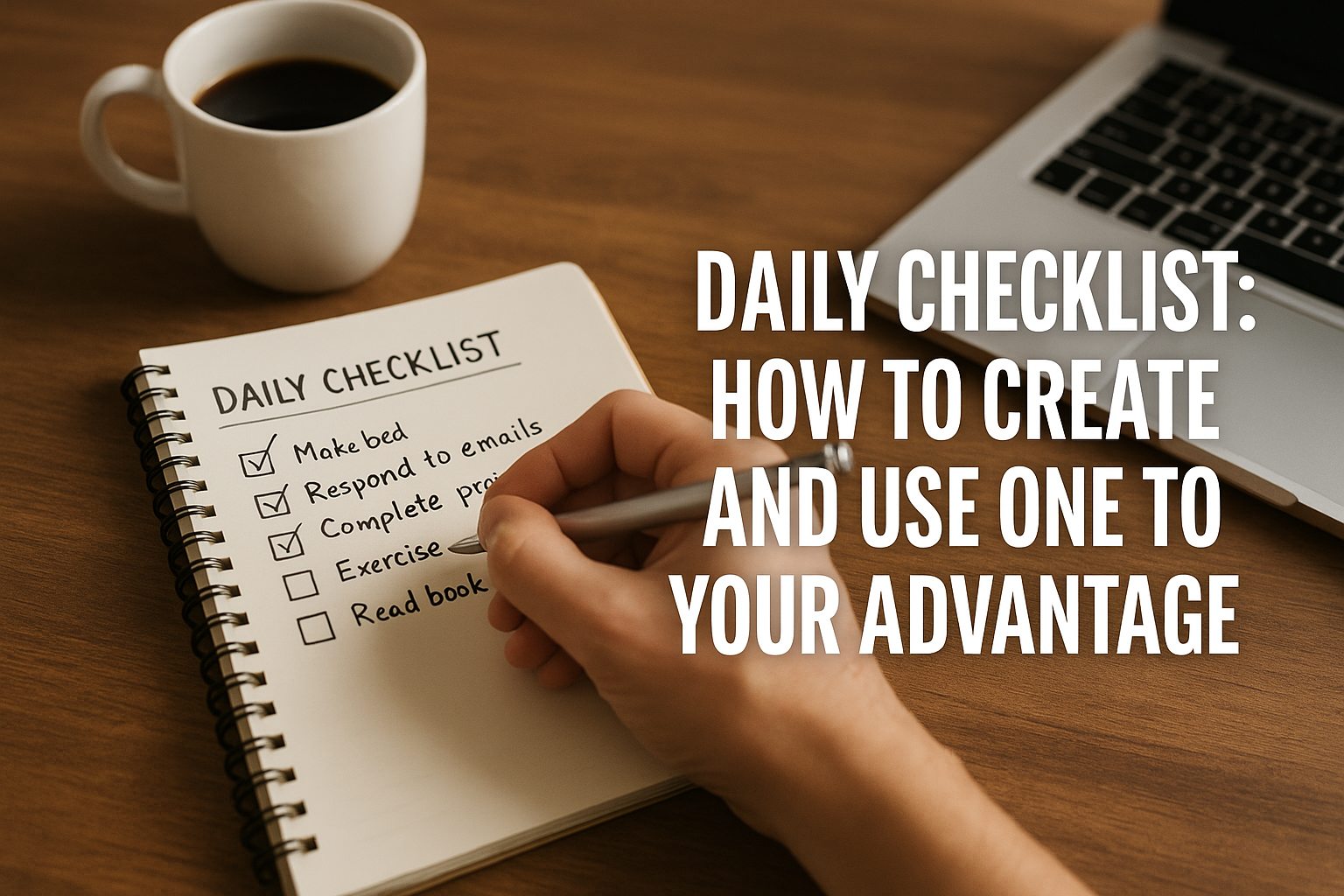
Do you ever feel overwhelmed by everything you need to accomplish in a day? Creating and using a daily checklist is one of the simplest and most effective ways to stay organized, boost your productivity, and reduce stress. A well-crafted checklist keeps you focused on your priorities, helps you track progress, and gives you a sense of accomplishment as you tick off completed tasks.
In this article, you’ll learn why a daily checklist works, how to build one that truly fits your needs, and tips for making it a powerful tool in your personal and professional routine.
Why Use a Daily Checklist?
A daily checklist isn’t just about remembering tasks. It’s a proven strategy to:
- Increase productivity: Visualizing your day helps you stay on track and accomplish more.
- Reduce stress: Organizing your thoughts on paper (or digitally) relieves mental clutter.
- Prioritize effectively: You can see what’s urgent, important, or can wait.
- Create accountability: You’re less likely to forget or ignore responsibilities.
- Motivate yourself: Crossing off completed items gives a psychological boost!
How to Create an Effective Daily Checklist
1. Choose Your Format
You can use paper, a planner, a digital app, or even sticky notes. Popular digital options include Todoist, Google Keep, and Microsoft To Do. The best format is the one you’ll use consistently.
2. List All Tasks
Every evening or first thing in the morning, list out everything you need to do that day. Include work tasks, personal errands, calls, meetings, and even self-care.
Tip: Don’t overload your checklist. Aim for 5–10 key tasks per day.
3. Prioritize Your Tasks
Not all tasks are created equal. Use a simple system to highlight the top 3–5 priorities (for example, by starring, numbering, or using color codes). Tackle these first!
4. Break Down Large Tasks
If a task feels overwhelming, break it into smaller, actionable steps. For example, instead of “finish report,” write “outline report,” “write introduction,” “edit draft.”
5. Allocate Time Estimates
Next to each item, estimate how long it will take. This helps you manage your time and avoid overcommitting.
6. Check Off as You Go
Whenever you complete a task, check it off. Enjoy the feeling of progress and let it motivate you to keep going.
7. Reflect and Review
At the end of the day, review your checklist. Celebrate your wins, move unfinished tasks to tomorrow, and note what you can improve.
Tips to Make Your Checklist Even More Powerful
- Keep it visible: Place your checklist where you’ll see it throughout the day.
- Limit multitasking: Focus on one item at a time for better results.
- Be flexible: Life happens! Adjust your checklist as needed, without guilt.
- Incorporate habits: Use your checklist to track habits like drinking water, taking breaks, or reading.
- Use templates: For recurring tasks (like morning routines), create a reusable template to save time.
Examples of a Simple Daily Checklist
Morning:
- Make bed
- Meditate for 10 minutes
- Review today’s goals
Work:
- Respond to urgent emails
- Complete client project
- Attend team meeting
Personal:
- Grocery shopping
- 30-minute walk
- Read 20 pages of a book
The Lasting Benefits
Using a daily checklist isn’t about perfection—it’s about progress. As you build this habit, you’ll gain confidence in your ability to organize, prioritize, and achieve. Over time, your daily checklist becomes a trusted tool for managing not just your to-do list, but your personal growth.
Start your next day with a checklist, and experience the difference it can make in your focus and satisfaction!